
The Boy In The Box
International collaboration leads to a successful identification
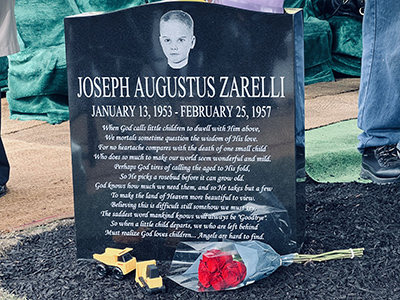
Joseph Augustus Zarelli
1953-1957
“Now our lad is no longer that ‘Boy in the Box.’ He has a name, and I was raised to believe that when you say the name out loud of a loved one, that person still lives in spirit amongst us,”
Detective Robert Hesser
Philadelphia Police Department
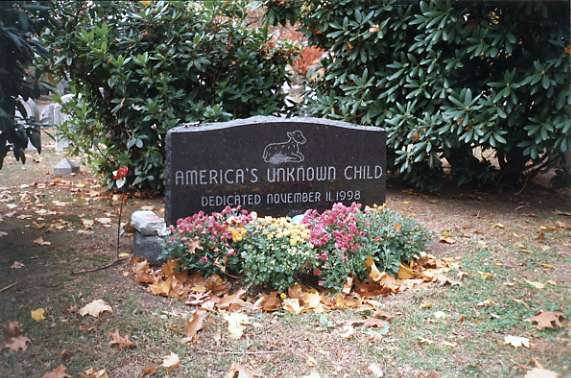
Explanation of Photo (Credit for Photo)
“Quote or description of Image”
Credit or Attribution with Date
The identification of the 1957 Boy in the Box as four-year-old Joseph August Zarelli established beyond a doubt the capability of Forensic Investigative Genetic Genealogy to work with highly degraded DNA that was previously thought to be beyond the limits of modern technology.
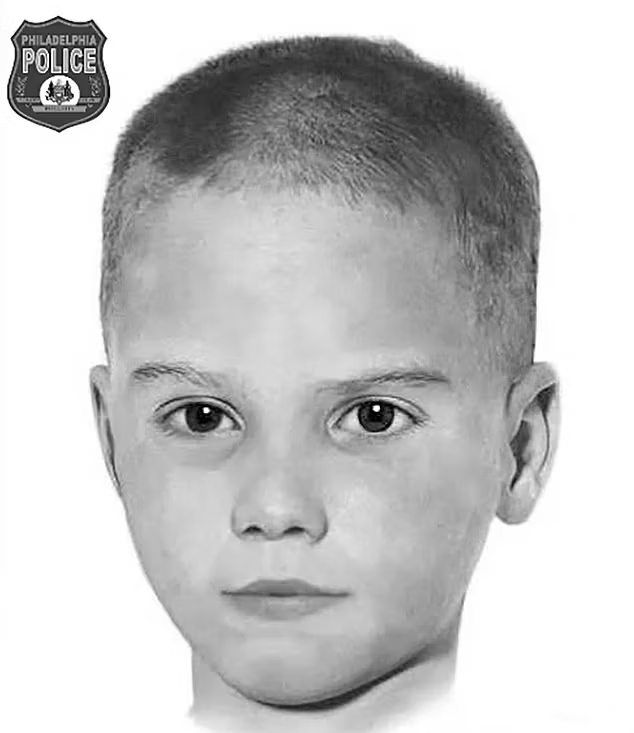
The Boy in the Box is the name given to an unidentified 4 to 6-year-old boy whose naked, battered body was found in a J. C. Penney bassinet box in the Fox Chase section of Philadelphia, Pennsylvania on February 25, 1957. He had been severely malnourished and had suffered extensive physical abuse. Extraordinary efforts were made at the time to identify him, including the distribution of 400,000 flyers bearing his likeness, but without results. The police distributed post mortem photographs of the boy fully clothed in a seated position, but no one came forward to identify him.
Many theories were advanced over the years, but his identity remained a mystery. In one instance, a psychic led detectives to a local foster home, where it was thought that the boy had been the illegitimate son of the home’s owner and his stepdaughter. In another case, a woman name Martha claimed that her mother had acquired the child from his birth parents and beat him to death. Still another theory claimed that the boy had been raised as a girl, and in 2016 a pair of writers from Los Angeles claimed that they had found a connection for the boy with a family in Memphis, TN. All of these theories were proven wrong.
The case passed through the hands of many detectives in the Philadelphia Police Department over the years, but its determination to identifying the Boy never wavered. In 2013, the Vidocq Society took an interest in the case; in 2016, the National Center for Missing and Exploited Children (NCMEC) created a facial reconstruction of the child and entered him into its database.
The advent of forensic genetic genealogy (FGG) finally gave hope that the Boy could be identified. In 1998, when the Boy’s remains were removed from Philadelphia’s Potter’s Field to a grave at the entrance to Ivy Hill cemetery in Cedarbrook, Philadelphia, bone and tooth specimens were obtained for future DNA testing. Yet in Fall 2018, initial attempts to extract DNA from the remains failed to generate SNP data that could be used for FGG analysis, due to the high degradation of the DNA sample.
The child was re-exhumed in April 2019 to obtain additional samples for DNA analysis. In June 2019, Identifinders sent a portion of the left femur, an incisor, and a molar to the International Commission on Missing Persons (ICMP) in The Hague, where three bone extractions were performed on the femur, after which the extract was sent to HudsonAlpha Discovery Life Sciences in Huntsville, AL. Sequencing failed, again due to high degradation. At the suggestion of Dr. Tom Parsons, then the Director of Science and Technology at the ICMP, Identifinders sent the specimens to the Department of Evolutionary Genetics at the Max Planck Institute (MPI) in Leipzig, Germany, for analysis. The MPI agreed to do the work as a part of a research program on its ancient DNA protocols.
The MPI was successful at generating FGG data that was then uploaded to the GEDmatch and the Family Tree DNA databases in 2021. It took only several weeks of genetic genealogical analysis to identify the Boy. On December 8, 2022, Philadelphia Police Commissioner Danielle Outlaw announced at a press conference that the Boy in the Box had been identified as four-year-old Joseph Augustus Zarelli, a native of Philadelphia.
Identifinders’ work on this case, in collaboration with the Philadelphia Police Department, merited third place in the prestigious Gordon Thomas Honeywell 2025 Cold Case Hit of the Year contest. This marked the third time that Identifinders had been honored by Gordon Thomas Honeywell for its cold case work.
No suspects in the murder have been identified. The Philadelphia Police Department maintains the case as an open homicide.